
Before You Give Feedback, Check This First
Feedback is often described as a gift. But in reality, it only feels like a gift when it’s delivered in a way that helps someone grow.
Too often, feedback gets avoided altogether… or it’s delivered in a way that creates tension instead of clarity. Most leaders are trying to find that middle ground: being honest without damaging trust.
Here’s the surprising truth: whether feedback is received and acted upon depends less on what you say and more on how you enter the conversation.
And that begins with your internal state.
Why Internal State Matters More Than You Think
We tend to think feedback success hinges on the right words, the right framework, or the right timing.
But people respond to energy, tone, and intent before words. They pick up on your non-verbal cues before you even open your mouth:
Your facial expression
Your posture
Your emotional tone
Your urgency or calmness
Your intention (to help vs. to vent)
If your internal state is tense, frustrated, rushed, or emotional, your feedback will almost always land poorly, even if your words are technically “correct.”
This is why two leaders can deliver the same message and get completely different results. Your mindset walks into the room before your message does.
Be aware of the hidden risk of “urgent” feedback. Many feedback conversations happen at the exact moment we feel the strongest emotions:
Right after a mistake
In the middle of stress
During a busy day
When frustration is high
It feels productive to address issues immediately and we think it’s efficient. But as leaders, we want to avoid emotionally reactive feedback, especially as it gets labeled as blunt, critical, or rude. When emotions drive the conversation, the other person’s brain shifts into defensiveness, not growth. And once someone feels threatened, their ability to learn shuts down.
Your internal state communicates:
Are you here to help or to correct?
Are you calm or irritated?
Are you curious or judgmental?
Are you invested in their growth?
When you pause and reset your mindset, you create psychological safety — the foundation of feedback that actually sticks.
The Two-Minute Reset That Changes Everything
One of the most powerful leadership habits is also one of the simplest: Pause before the conversation.
Before giving feedback, take two intentional minutes to check in with yourself.
Ask:
What am I feeling right now?
What outcome do I want for this person?
Am I trying to help them grow, or release frustration?
Would I be open to receiving this feedback in my current tone?
Often, simply acknowledging your emotional state is enough to shift it.
Add a few deep breaths. Slow your pace. Think about the message you want to convey.
Two minutes can completely change how your message lands.
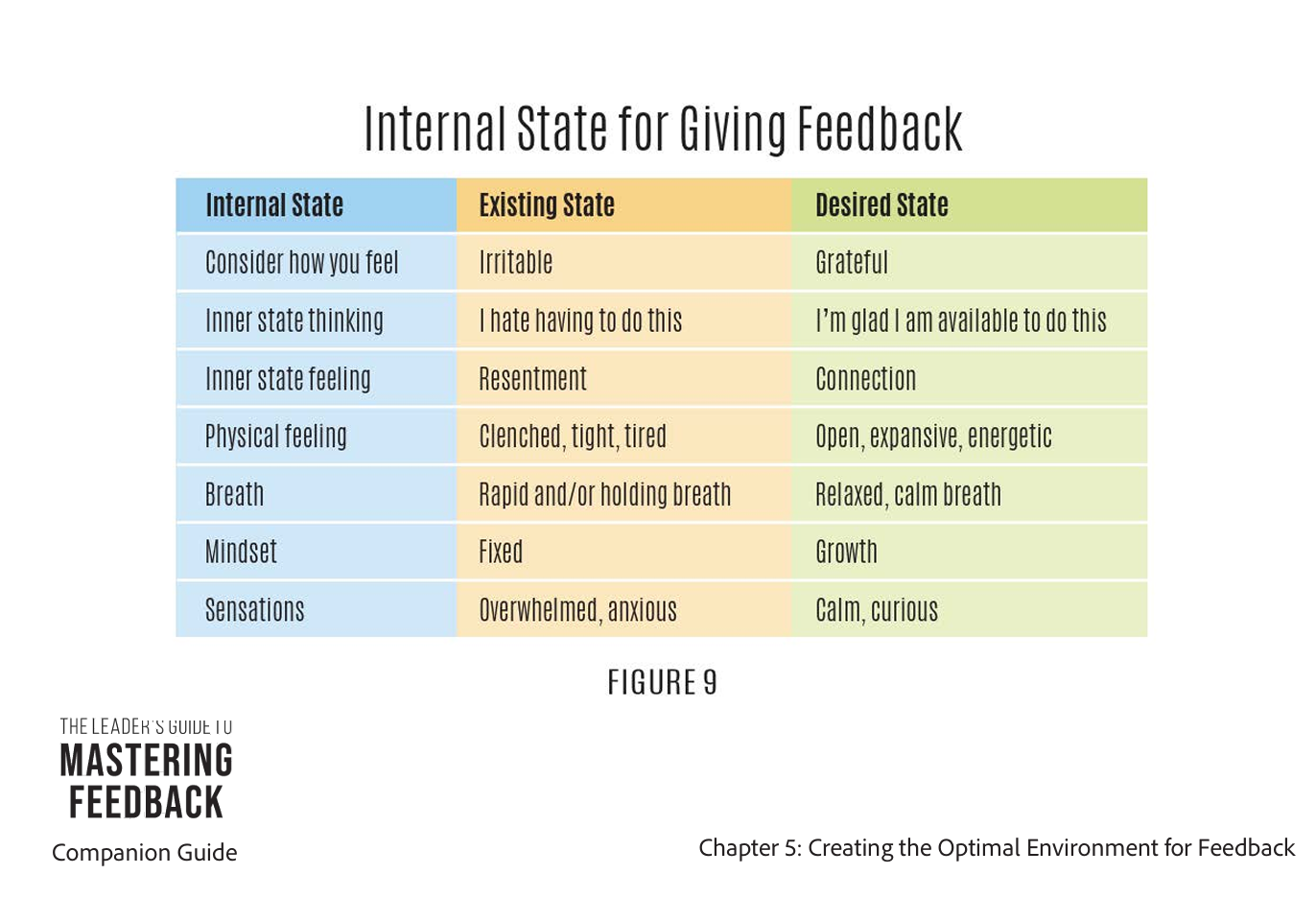
From Reaction to Intention
Reactive feedback says: “This needs to stop.” Intentional feedback says: “I want to help you succeed.” The difference is subtle to you, but powerful to the person receiving the feedback.
When you give feedback with intention:
You listen more.
You ask better questions.
You create dialogue instead of defensiveness.
You focus on the future, not just the problem.
And most importantly, people feel safe enough to actually use the feedback.
A Small Habit with Massive Impact
You don’t need a complicated script to improve feedback, perfect wording, or a complete personality change. You need to pause.
The leaders who create successful growth cultures give feedback from the right mindset, not the leaders who give the most feedback.
Before your next feedback conversation, take two minutes to reset. It might be the most productive two minutes of your day.